

Count the tabs you have open right now.
I’ll wait.
If you have fewer than eight, you are probably very disciplined. If you have twelve or more, welcome to the club. This is where many Quebec small-business owners spend their days: Notion for notes, Calendly for appointments, Stripe for payments, Mailchimp for emails, Wave for accounting, another tool for proposals, another for the website, and Zapier trying to hold everything together with digital tape.
Even listing them is exhausting.
What if this chaos of applications is not a discipline or time-management problem, but an architecture problem? The structure of your work environment may be working against you, not your lack of willpower.
The data are pretty clear about this. Let’s see what they say.
You lose 32 days a year switching tabs

The average digital worker switches between applications and websites nearly 1,200 times a day. That is roughly 150 transitions an hour, or one every 24 seconds. It is not multitasking; it is pinball. Altogether, navigating between tools consumes 32 working days a year, according to a RingCentral report cited in this detailed Speakwise analysis .
Thirty-two days. That is almost five weeks of vacation you did not take, except you spent them clicking between Stripe and your inbox.
Navigation is not the only cost. According to the same data, professionals spend an average of one hour a day finding information scattered across email, messaging, shared documents, task managers, and other applications. Altogether, 9% of annual working time goes toward maintaining the software setup itself. None of that time creates value for your customers.
Your brain hates multitasking as much as you do
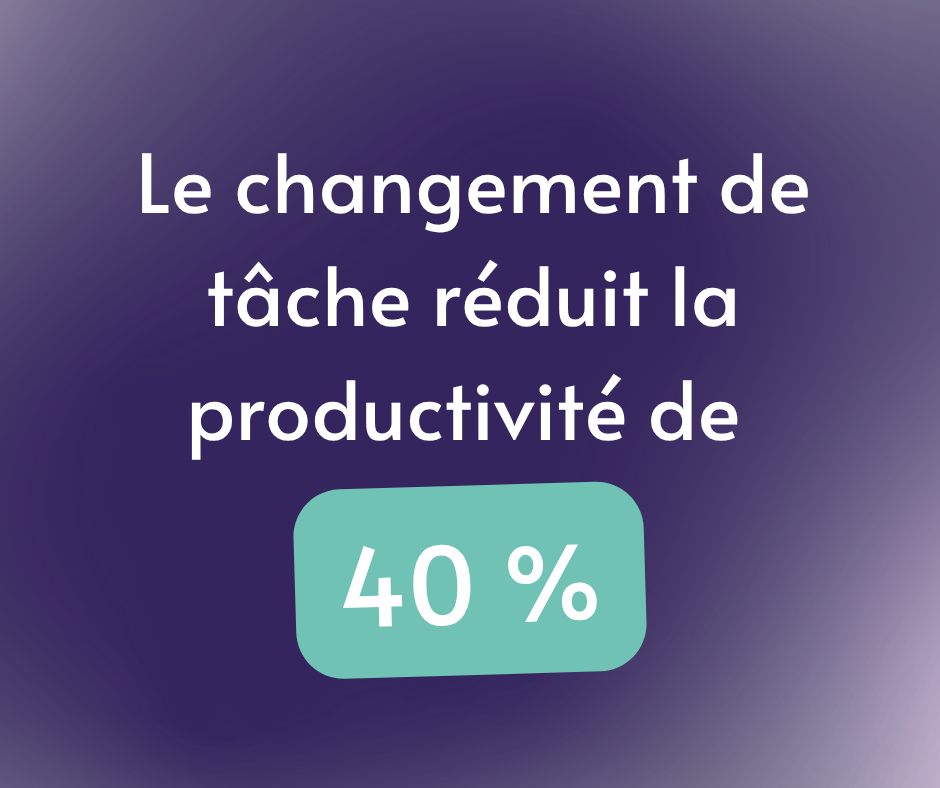
Multitasking is a myth for 97.5% of us. Only 2.5% of the population can actually manage multiple streams of attention in parallel without losing performance. For everyone else, what we call multitasking is really rapid task switching: the brain disengages one network of neurons to activate another, which takes a great deal of energy.
The practical result: the American Psychological Association estimates that this kind of repeated switching can reduce a person’s overall productivity by 40%. According to a Qatalog and Cornell University study , it takes an average of 9.5 minutes to regain productive focus after changing apps.
Dr. Gloria Mark of UC Irvine goes even further: after an interruption, it takes 23 minutes and 15 seconds to return to a state of deep concentration. Every notification, tool switch, and “quick glance” at your inbox has a cost.
Your brain is not broken, your setup is.
You’re not the only one who finds it difficult
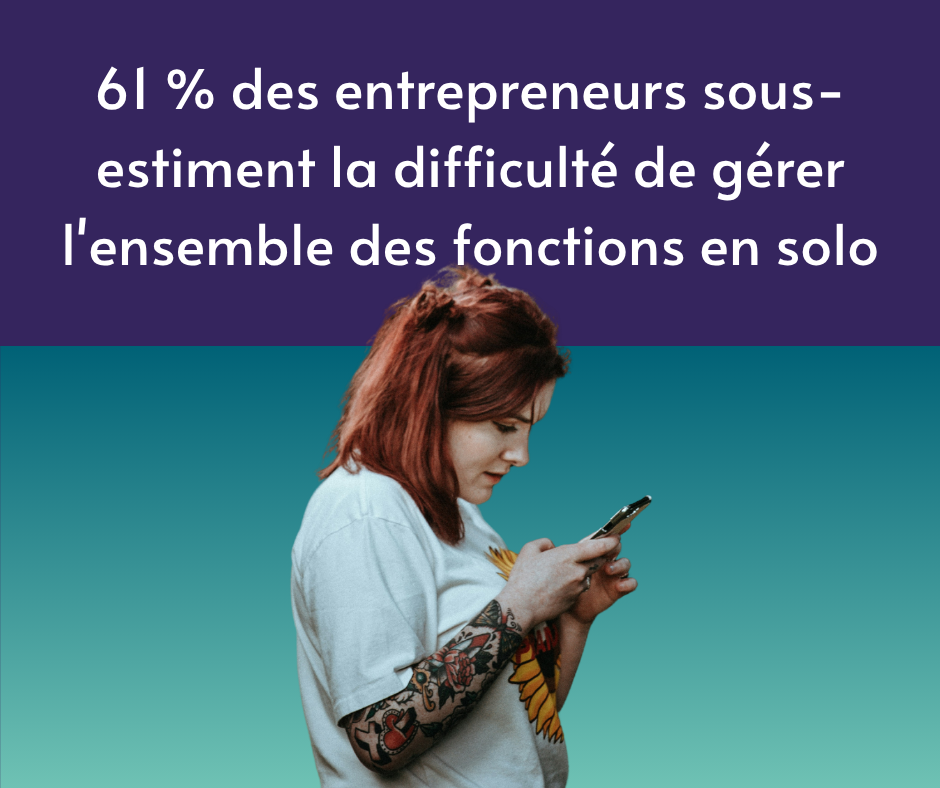
According to Simply Business’s 2025 annual report on solopreneurs , 61% of independent entrepreneurs admit they underestimated the difficulty of handling every business function alone.
That is more than six out of ten people who started a business expecting it to be easier. Not because they lacked expertise, but because nobody told them they would also become their own marketing, accounting, technical support, and customer service departments. Each of those roles comes with its own applications, interfaces, and passwords.
If this sounds familiar, you are in good company. More importantly, it does not have to stay this way.
What it really costs you, and what you could save
According to a Nexuscale analysis , a typical software stack for a solo entrepreneur managing growth and operations can look like this:
| Tool | Monthly cost |
|---|---|
| Prospecting tool (e.g. Apollo) | $149 |
| Data enrichment (e.g. Clay) | $149 |
| Prospecting email (e.g. Instantly) | $97 |
| Automation between tools (e.g. Zapier) | $49 |
| Billing / accounting (e.g. FreshBooks) | $25 |
| Total | ~$470/month |
That is about $5,600 a year for one user, without counting tools for a website, bookings, contract signatures, online courses, or email marketing, which are often added separately.
But price is not the only problem. According to BetterCloud , about 35% of the SaaS licences purchased by companies are underused or never used during a typical day. Vendors also increase their prices by an average of 8% to 15% a year.
You pay for tools you do not fully use, whose prices regularly increase, and that cannot exchange data without turning you into a digital plumber using Zapier.
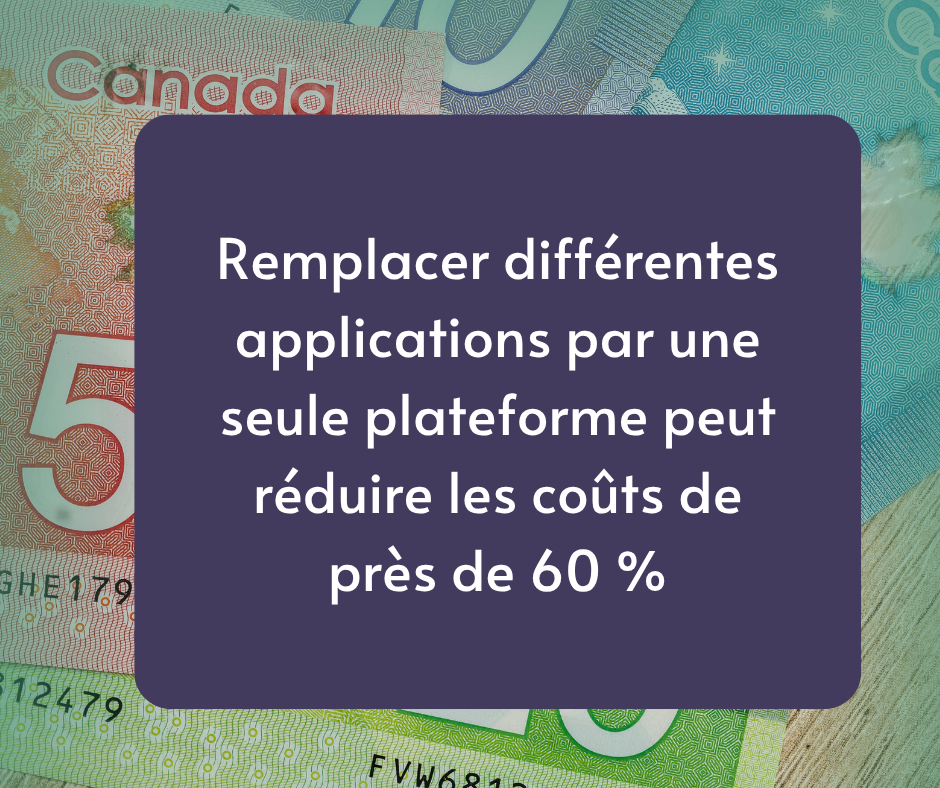
Replacing this fragmented ecosystem with a unified platform can reduce costs by almost 60% and eliminate integration fees entirely.
One platform, with a person behind it
The real question is not simply how much it costs. What could you do with those 32 recovered days each year, the mental energy now spent switching tabs, and the money going to subscriptions you barely use?
That is exactly why I built Parle.
Parle brings together what a small business truly needs: a website, blog, podcast, booking pages, proposals, invoicing, online store, courses, and email marketing. Everything lives in one place, and the data works together natively. No Zapier. No five different passwords. No searching through another tab.
When you have a question or problem, you do not face a queue of tickets or a support bot. You deal directly with me, the founder who built the tool and understands what you are going through because I ran a solo business for years.
That is the real value of a platform designed for local small-business owners.